
Becoming certified organic is often a way for farmers to communicate their values to customers. It symbolizes a prioritization of environmental practices, especially within pockets of their market that they are unable to connect with face-to-face.
With so many farmers already being worn thin with responsibilities, the often career-long decision to get certified can be daunting, especially without full clarity about what benefits await on the other side.
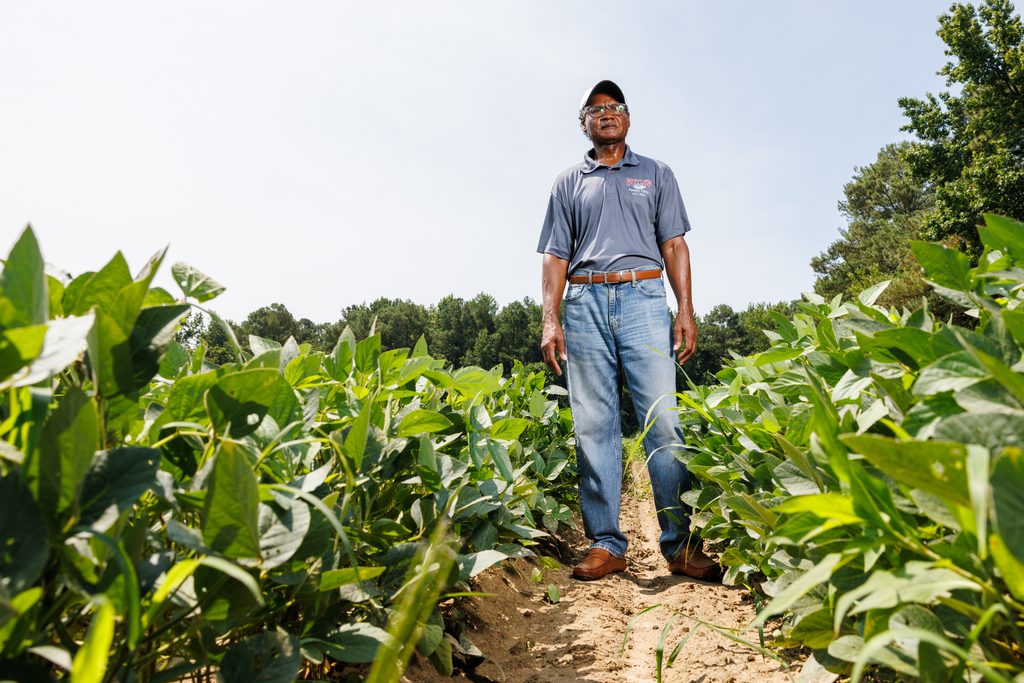
“We’re preparing for the next generation,” said Timmy Butler of Butler Family Farm in North Carolina, “[and] trying to maximize income potential but at the same time keep it a natural farm like it’s always been.”
While the opportunity is great, the combination of the initial application and subsequent annual maintenance is a substantial amount of work. Whether that investment of time and labor is worthwhile will depend entirely on the individual farm, farmer, and the market they serve.
For Raúl Rosado, a seed producer at Desde Mi Huerto farm in Puerto Rico, organic certification was a step he hoped would create baseline consumer trust as he expanded into international exports. The actual processes on his farm would not change much throughout this transition, as he was already using organic practices.
“We had always farmed organically,” said Rosado. “We wanted the USDA Organic logo so that we could represent our ways of thinking and planting when we weren’t there to tell people ourselves.”
The question every farmer on the cusp of transition likely wonders is whether certification delivers enough value to justify the costs. Butler has been able to utilize USDA’s cost-share programs to diffuse some of the costs of certification.
“I can file for cost-share on 75% of my organic certification,” he said. “Our high tunnel greenhouses were also done through cost-share. [The USDA] paid 80% of the cost of putting up the greenhouse, and I paid 20%.” This funding is offered on an application basis.
He has also enjoyed a significant increase in profit margins on certain crops. “I’ve sold organic soybeans for more than $20 a bushel over the last 10 years, while conventional soybeans averaged around $7 to $8 a bushel,” said Butler. “One year we sold some for $40 a bushel.”
In Rosado’s case, 10 years after being certified, he is still unsure whether the effort was worthwhile. He has not yet expanded into exports, and certification has not increased his prices locally. On top of this, it has created some new limitations for him.
“I think it can kind of hurt your relationship with other farmers if you become organic and the rest aren’t,” said Rosado. “Because then you cannot collaborate as much. I cannot find other farmers here in Puerto Rico who want to produce seeds for us. I mean, I could, but I wouldn’t be able to do it under the organic brand, because it’s not being produced here. So, it’s very limiting.”
There are only two certified organic farms in all of Puerto Rico, where it is especially challenging to apply because there aren’t any on-island certifiers. To meet USDA requirements, a farmer would have to bring in a certifier from the mainland U.S. or Costa Rica. Certifiers are required to visit farms at least once per year for on-site inspections, a cost which farmers are responsible for shouldering.
Certification generally takes three to six months from the time of application submission to certification, though the application process itself can take months or even years, depending on a farm’s capacity to complete it. If farms have been using non-organic practices until the point of transition, a 36-month transition period is mandatory before beginning the application.
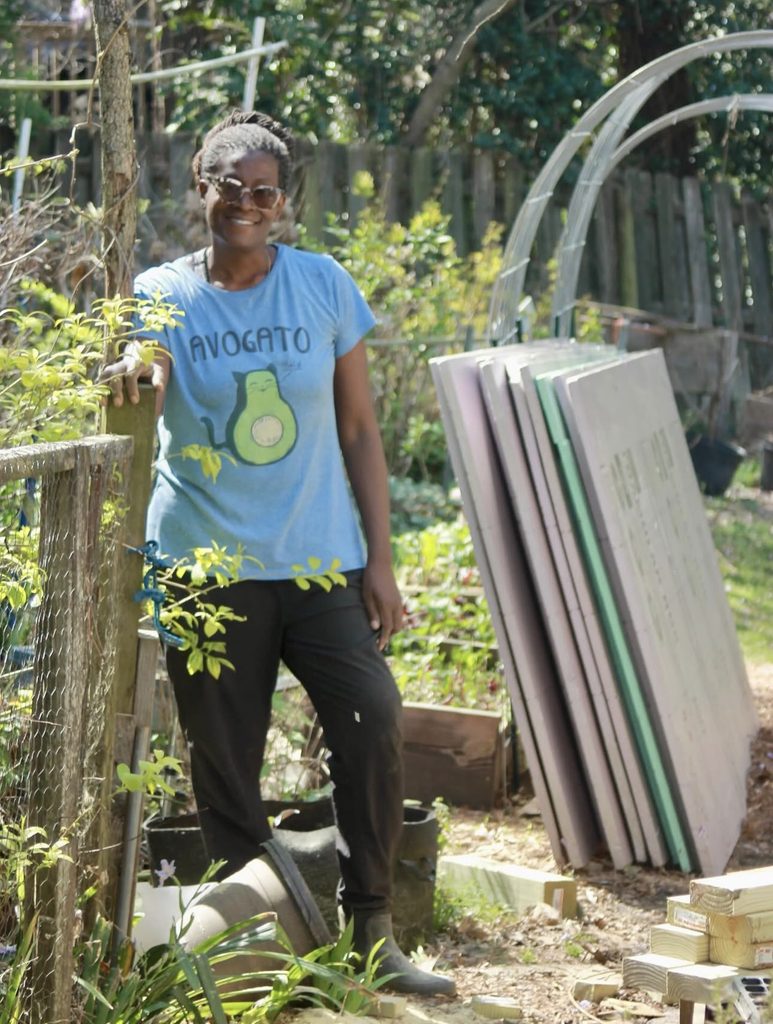
In Atlanta, Georgia, farmer Corinne Matthews at Eco Sun Farms is in the early stages of her application and similarly seeks to communicate environmental values to consumers.
“I had been thinking about it for a while and had participated in a lot of organic-focused events,” said Matthews. “I first looked into Certified Naturally Grown certification, but I was turned off by the process.”
Certified Naturally Grown (CNG) can be beneficial for small producers who want to be organic but aren’t quite ready for whatever reason, said Meredith Morgan, client services and marketing manager at Quality Certification Services (QCS).
Matthews initially applied for CNG but was told she would have to stop growing hydroponically to be approved.“Their certification is farm-wide, not product-specific,” she said of CNG certification. “Because I grow some crops hydroponically and didn’t want to stop, I chose not to pursue it.”
USDA Organic certification, on the other hand, does certify on a product-by-product basis — a double-edged sword as it allows farms that aren’t farming 100% organically to be certified, but also makes it more expensive for farms that may implement new crops into rotation once certified.
“There aren’t many organically certified mushroom producers,” she said, hoping that particular organic label would distinguish her from other similar products. “I hope it’s worth it, but I don’t know yet.”
Morgan encourages farmers to consider why certification is important to them before digging into the tedious and lengthy process of acquiring it.
“The taste of the produce is like night and day compared to before [going organic],” said Butler. “On the negative side, weed control is terrible. That’s probably the number one problem with being certified organic. There are more expenses involved in controlling weeds, and it takes more labor and fuel.”
Some common incentives beyond consumer trust include gaining access to wholesale markets, food co-ops, distributors, or specialty retailers that require certified products.
There are nearly 80 agents (primarily private companies or state agencies) in the U.S. that are authorized to certify farms and businesses as USDA organic. Farmers’ decisions about which agency to choose generally comes down to geographic proximity, availability, fees, and the certifier’s scope of coverage.
“I reached out to three certifiers,” said Butler. “The first question I asked was how many farms they had in [the area]. The second was about their process. The third was whether they mostly worked with large commercial farmers or smaller farms with less than 100 acres. I was looking for somebody who worked with small farms so they could understand what we were dealing with.”
Chanal Carlisle of Florida Organic Growers (FOG), a nonprofit organization that operates QCS, points to the varying guidelines that each certifier may have for the farms in their networks.
“Certifiers, from my understanding, have different rules on what is allowed,” said Carlisle. “So we tell everyone to talk to their certifier to confirm that it [a particular product or practice] is approved. But the resources that we give them should work because they are under the umbrella of organic practices.”
Organizations participating in the USDA’s Transition to Organic Partnership Program (TOPP) have emerged in part to help farmers navigate these complexities. TOPP is a USDA-funded cooperative agreement that connects farmers with educational resources, workshops, mentors, and technical assistance as they transition to organic, and supports farmers who have already made the switch.
Carlisle works with the Southeast TOPP program to coordinate resources among 33 partner organizations across the region. These partners provide workshops, educational events, technical assistance, and other support for farmers transitioning to organic production or maintaining organic certification. [Note: As a TOPP partner, RAFI shares program activities and resources with farmers interested in organic certification.]
There are heaps of qualifications regarding which types of inputs and fertilizers can be applied, as well as which pest management and record-keeping practices can be implemented.
Historically, Carlisle said, farmers had to piece this kind of information together from multiple organizations and sources. The Organic Materials Review Institute (OMRI) now has a comprehensive list of branded products that are approved or prohibited.
One of the biggest concerns Morgan hears from farmers involves prohibited substances. Farmers often worry that a single mistake could derail years of work and reset the transition clock, requiring them to wait another 36 months for certification. Morgan says this is generally a misunderstanding of the process.
“A lot of transitioning farms and operations can get into a mindset of if ‘I do one wrong thing, I’m booted out — and I’ll never be able to get certified,’” said Morgan.
In reality, most certification programs are designed around continuous improvement. Certifiers frequently work with farmers to correct mistakes, address noncompliance issues, and strengthen systems rather than immediately removing them from certification.
“Even if there is a non-compliance, we would issue a period of time to respond to it, make corrections, and show us evidence that you’re changing the system and that it won’t happen again,” said Morgan. “We really do want people to stay certified. We want people to still be in the system, to market and sell their products.”
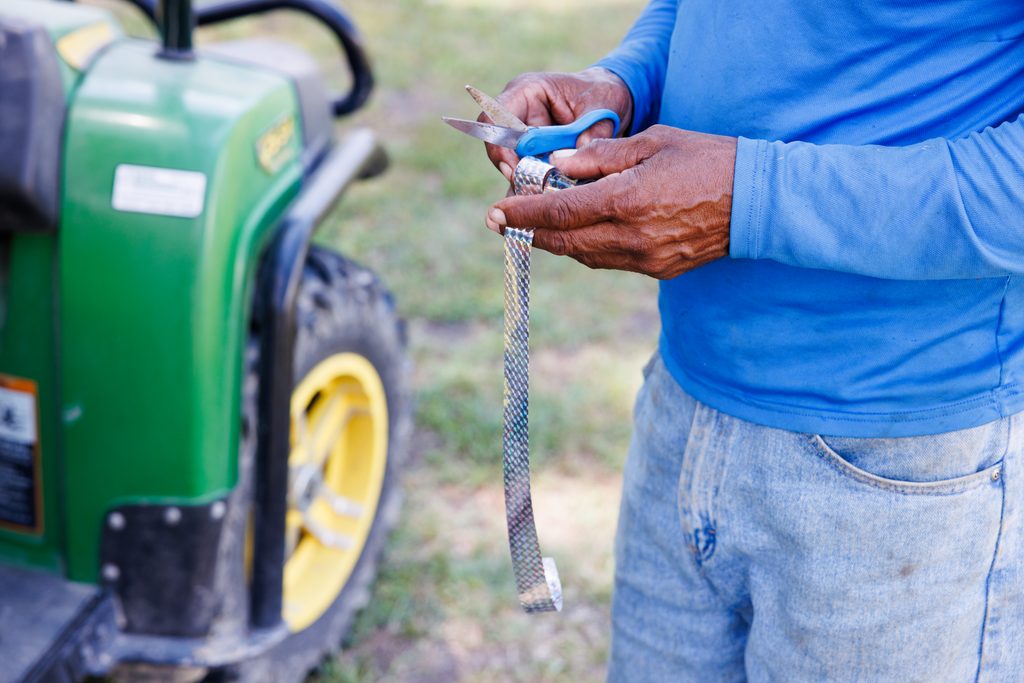
Paperwork is generally regarded as the most labor-intensive part of both the application and maintenance process. For Rosado, recordkeeping and data collection remain significant challenges even after a decade of certification.
“It’s very labor-intensive,” he said. “And every year, there seem to be additional documentation requirements. If I wasn’t doing so much data collection, I would definitely be using my time for other stuff.” This workload is distributed amongst his staff.
Matthews has already encountered this challenge in the throes of the application process.
“The application is so ridiculous and overwhelming,” she said. “I’m not sure I’m ever going to get through it.”
Like many small farmers, she is balancing production, infrastructure projects, workshops, markets, and day-to-day business operations while trying to build recordkeeping systems to meet certification requirements.
“For us, it was relatively seamless,” said Butler. “Between me, my two brothers, and my seven sisters, if you give us a map, we can read it. I sought out Quality Certification Services out of Florida, and they told me how to do it.”
Because they have such a robust team, the Butlers were able to manage the heavy lifting of paperwork, which is more strenuous for smaller operations.
Central to the certification process is the Organic System Plan, a detailed document that outlines how farms maintain compliance with organic regulations. Farmers can refer to these templates for guidance based on the sector they are in.
Morgan encourages farmers to think about certification less as paperwork and more as system-building. Certifiers are not looking for one perfect way to keep records. Instead, they want to see that farmers have systems in place to document what they are doing and verify that standards are being met.
Some producers rely on notebooks, others use spreadsheets, software platforms, photographs, or combinations of multiple tools.
Some do discover unexpected benefits from the process. Morgan has spoken with producers who initially viewed recordkeeping as a burden but later realized the records helped them make better business decisions, evaluate inputs, compare crop performance, and understand sales trends.
“It gives us a much clearer snapshot of our farm,” said Butler. “We keep detailed records on planting dates and can compare quality over the years and see what crops do better at certain times. I can look back now and tell you what watermelon production was 10 years ago versus now. It makes it easier to know what we’re doing instead of trying to remember things.”
For Rosado, however, the experience has felt primarily cumbersome, serving little purpose beyond compliance.
“I’d say about 90 percent of it is only used for certification,” he said.
He also mentioned that being organically certified has not improved the farm’s access to grants, funding opportunities, or government programs.
“That’s one of the biggest frustrations,” he said. “Being certified organic doesn’t provide any advantages when applying for grants, working with agencies, or accessing resources. You still go through the same processes as everyone else. There are no shortcuts, special assistance programs, or additional support from USDA, NRCS, or local agencies. It really is just a marketing tool.”
Morgan encourages producers to be realistic about what certification requires, but she also believes farmers should not be intimidated by the process. Certifiers, she says, genuinely want producers to succeed.
Miranda Lipton is a food journalist based in Brooklyn, New York. She was a 2025 fellow in the Johns Hopkins Food Systems and Public Health Journalism program, and her work can be found in Mother Jones, The Guardian, National Geographic, and more.