With harvest underway across the Southeast U.S., many farmers are taking stock of a growing season shaped by uncertainty. Months of drought across Georgia, Florida, Alabama, and the Carolinas forced difficult decisions about planting, irrigation, livestock management, and farm finances. Some producers watched irrigation costs soar, while others delayed planting, waiting for rain that was far too scarce. Many farmers relied on years of experience, healthy soils, and a bit of faith to carry them through.
Now, as the combines roll through fields and farmers begin planning for next spring, a reflective question emerges: What can we do today to reduce the impact of the next drought?
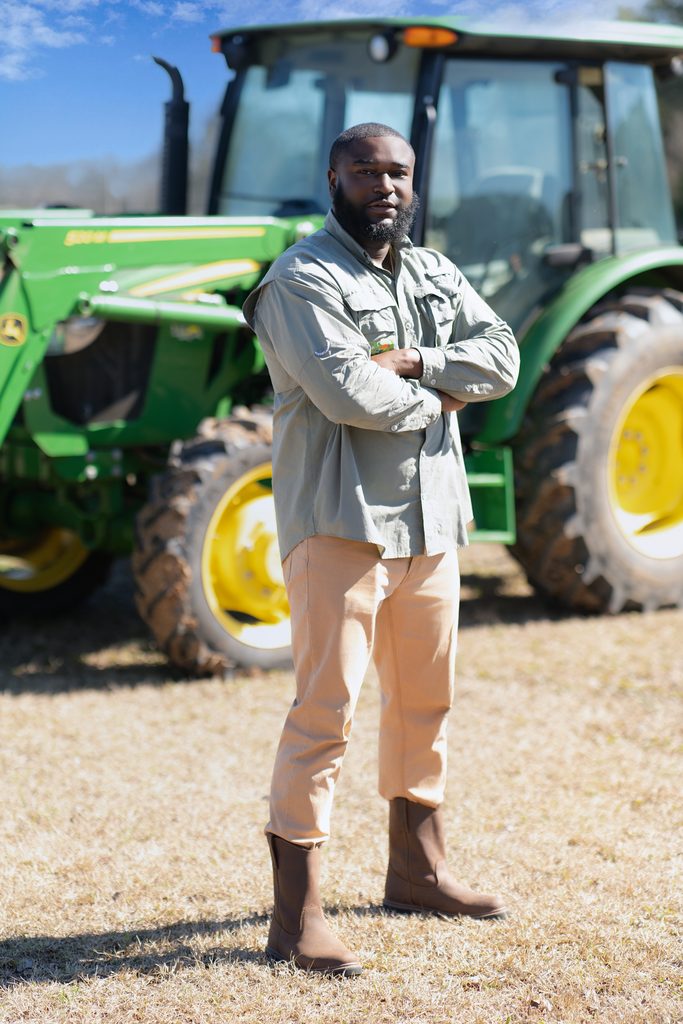
For Sedrick Rowe, a peanut farmer in southwest Georgia, the lesson was skillful timing throughout the start of the season. “Hurry up and slow down,” he recalled. “Those are the only two gears we can use right now.” It was in the early weeks of the planning and planting that Sedrick found himself weighing the same decision many farmers faced across drought-stricken parts of the Southeast. “Should I put them in now? Should I wait for some rain?”
Those decisions carried real consequences. Delayed planting can reduce yields. Dry conditions can stress crops during critical growth stages. For livestock producers, drought can reduce pasture productivity and increase feed costs. The impacts continue long after the weather changes.
Across the country, state and federal agencies monitor drought conditions and provide updates that farmers can use to inform their decision-making. The U.S. Drought Monitor tracks drought intensity from D0, or abnormally dry conditions, through D4, exceptional drought. Most states, like Georgia and North Carolina, maintain systems that monitor groundwater, soil moisture, streamflow, reservoir levels, and agricultural impacts to identify drought conditions before they become too severe.
Farmers repeated one theme: knowing a drought is developing and being prepared for it are two different things.
Lesson One: Water Access Matters More Than Ever
This year’s drought made one reality especially clear: farms need reliable access to water. How they access that water varies widely. While many urban and suburban growers rely on municipal water, most rural farmers depend on wells or ponds, which are largely powered by electric or diesel pumps. Many high-acreage producers throughout the Southeast continue to practice dryland farming, relying primarily on rainfall rather than irrigation.
“A majority of farmers don’t have irrigation,” Rowe explained when talking about his peers in southwest Georgia.
Each approach comes with advantages and challenges. Municipal water systems can provide dependable access, but often become expensive during drought. Wells offer greater independence, but require energy to move water. Dry farming avoids many infrastructure costs, but leaves producers vulnerable when rainfall fails to arrive.
When thinking about strategies for managing a farm’s long-term drought resilience, farmers should consider evaluating irrigation capacity, improving water storage, exploring alternative energy sources for well pumps, and keeping non-irrigated fields covered to protect the soil from surface evaporation. This season underscored the need to understand and strengthen a farm’s water system well before drought conditions develop.
Lesson Two: Healthy Soil is Water Infrastructure
A farm’s first reservoir is often its soil. Near Gainesville, Florida, Melissa DeSa, Seed and Garden Director at Working Food, a community-rooted nonprofit working to build a just, resilient food system in North Central Florida, spends much of the year focused on a single goal. “All we spend our time doing is trying to make a better soil 365 days a year so that when we have dry conditions like this, we can actually hold some water and hold some moisture.” Healthy soils serve so many beneficial functions during drought. Organic matter helps capture rainfall, reduce runoff, and retain nutrients. Cover crops, mulching, compost, reduced tillage, and other soil-building practices can help farms hold onto every drop of water they receive.
These investments become especially important during drought times. “It’s definitely worse,” DeSa said when comparing this year’s conditions to previous years. “The soil is stressed.” As the fields are prepared this fall and winter, many farms will evaluate their soil health practices during the drought and identify opportunities to improve moisture retention before the next season begins.
Lesson Three: Adaptation Happens Before the Crisis
One of the most compelling lessons from this year’s drought comes from a Florida farmer who spent decades saving seed from plants that survive challenging conditions. One of DeSa’s colleagues, an older watermelon producer, continues to harvest melons despite drought conditions because he has spent decades selecting seeds from plants that thrive without irrigation. “Year after year, he saves seed from the strongest plants and replants them,” she recounts. The result is a crop that is increasingly adapted to local conditions. The broader takeaway is that drought resilience evolves through ongoing management decisions, infrastructure investments, soil improvements, and careful observation.
Lesson Four: Use the Resources Available
Federal and state programs exist to help producers manage drought-related losses and implement conservation practices. USDA programs tied to drought declarations can provide access to emergency loans, forage assistance, conservation support, and other resources. RAFI’s May 2026 drought resource guide provides information on how to document losses, maintain production records, and seek technical assistance when navigating disaster assistance programs.
Rowe believes support systems can become more effective when they help farmers prepare before conditions worsen. “Farmers need to know ahead of time,” he mentioned when speaking about accessing available resources.
As farms move into the off-season, now may be the ideal time to connect with local extension agents, conservation specialists, and technical assistance providers to identify opportunities for proactive drought mitigation before spring planting begins.
Looking Ahead: Preparing for the Next Drought and Beyond
Fields will soon be planted with cover crops, and farmers will take stock of what worked and what didn’t. The growing season will be winding down, and preparations for the next season will begin. Plans for equipment repairs and infrastructure projects will be shaped by the lessons learned from this year’s record-breaking drought. The most valuable lesson to keep in mind is that managing drought requires a range of solutions. The farms best positioned to weather future droughts will likely be those that use the months between growing seasons to strengthen their soils, improve irrigation systems, explore new technologies and conservation practices, and engage with technical assistance providers. The next drought may be impossible to predict with certainty, but investing in solutions now will set your farm up for resilience long before the abnormally dry conditions become commonplace.
Hope Ostane-Baucom has been with RAFI since July 2024, serving as its Farmers of Color Network Communications Project Manager. Hope is passionate about local food systems and integrated pest management.