Agriculture has long celebrated independence, grit, and self-reliance. Farmers are innovators and problem-solvers by necessity. When equipment breaks, they find a solution. When weather disrupts the season, they adapt. When mental or physical ailments arise, they push forward. But no one sees the fatigue, arthritis, or chronic illness that can turn routine tasks into daily challenges — some of which cannot be overcome alone.
Across the country, hundreds of thousands of farmers are navigating disabilities, chronic health conditions, injuries, and the physical changes that may come with aging. Yet many spend years adapting in silence before seeking assistance. Some do not identify as having a disability. Others fear being perceived as incapable. And many are simply unaware that support exists.
Organizations like the National AgrAbility Project and Healing by Growing Farms are working to change that narrative. Their message is simple: seeking help is not giving up. In many cases, it is the very thing that allows a farmer to continue farming.
Seeking Safer Ways to Keep Farming
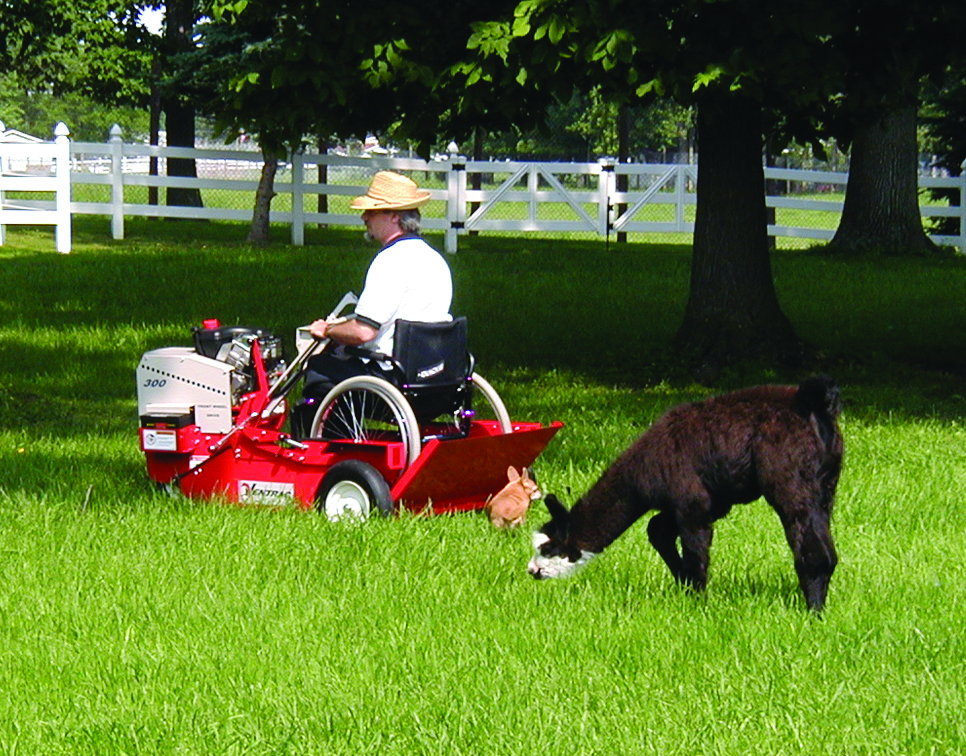
According to Paul Jones, National AgrAbility Project Manager, disability affects a significant number of people working in agriculture. One of the most critical factors driving that reality is the aging farmer population. As farmers age, they are more likely to experience arthritis, mobility limitations, vision and hearing impairments, chronic illnesses, and other conditions that can affect their ability to work safely.
Disability is not always visible. A farmer could be recovering from cancer treatments, living with PTSD, or coping with chronic pain that isn’t immediately apparent to others. Some disabilities fluctuate from day to day. A farmer may have a productive day in the field and appear perfectly able to an outside observer. What that observer may not see is the recovery required afterward or the symptoms that emerge the next day. That misunderstanding can become a barrier to support. “A lot of farmers,” Jones notes, “would probably not consider themselves to have a disability.”
When farmers don’t recognize their own need for support, they may delay seeking assistance until a challenge becomes a crisis. Crystal Cook Marshall, who leads NC AgrAbility as the NC Agromedicine Institute Coordinator at North Carolina A&T State University, regularly observes farmer self-reliance. “They’re not the group that tends to ask for help,” she says. The farmers NC AgrAbility hears from often delay seeking help until their situation becomes unmanageable.
Jones and Marshall emphasize that acknowledging a limitation is not the same as admitting defeat. Seeking assistance is far from weakness. It is, instead, an act of true stewardship for the farm and the well-being of those who work on it. Many of the farmers who connect with AgrAbility are not looking for someone to take over their operation. They simply need help finding a safer, more sustainable way to continue doing the work they love.
Unique Farms Require Unique Solutions
One of the defining characteristics of AgrAbility programs is their commitment to individualized support. “No single disability is identical, no farm is identical, so you can’t use a cookie-cutter kind of approach,” Jones explains. That philosophy is why farm visits are a gold standard of service. Staff members visit farms, observe daily operations, talk with farmers and family members, and identify practical solutions tailored to each situation.
Sometimes the answer is assistive technology. A farmer with mobility challenges may need a lift system to safely access equipment. Someone with vision loss may require rope guides or optical headband magnifiers. A producer recovering from an injury may benefit from modifications that reduce physical strain.
Other times, the solution has little to do with equipment. Marshall notes that many farmers arrive with multiple challenges layered on top of each other. Financial concerns, housing insecurity, succession planning, healthcare navigation, and mental health support often become a part of the conversation. The work is hands-on, relationship-based, and deeply personal. Even when AgrAbility partners with vocational rehabilitation programs or other agencies, the relationship continues. “We do not turn you out as a client,” Marshall explains. “That relationship doesn’t end.”
While seeking support, one challenge farmers may encounter is the time it takes to access certain services or equipment. Jones acknowledges that delays can occur when working through government systems and funding programs. Farmers often need solutions immediately, especially when crops need to be planted, tended, or harvested. Yet waiting does not mean standing still.
Experienced specialists can help explore creative options that allow farmers to continue moving forward while longer-term solutions are being pursued. For some farmers, that may mean modifying daily tasks. For others, it may mean shifting labor responsibilities, adjusting production practices, or exploring different enterprises that better align with current abilities. Marshall encourages farmers to think proactively about how their operations can evolve over time. “You can still farm,” she states, “but maybe it’s time to do something else that’s still farming.”
That shift might involve moving from large-scale row crop production to greenhouse production, specialty crops, agritourism, direct marketing, or other enterprises that place fewer demands on the body. The goal is to go from mere survival to continuity.
No Farmer Should Face Disability Alone
For Dr. Ivette Ruiz, founder of Healing by Growing Farms, support extends beyond equipment and accommodations. After sustaining a traumatic brain injury while preparing to deploy with the American Red Cross during Hurricane Isaias, Ruiz faced years of rehabilitation and an ongoing recovery. She understands firsthand what it means to navigate disability while trying to maintain purpose and independence. With the same spirit of resilience common among many farmers, she was determined to continue working despite advice from others to slow down and collect a disability check. Instead, she established an inclusive green space that acts as a central hub, where farming becomes the foundation for empowering individuals with disabilities.
Through Healing by Growing Farms, Ruiz works with individuals recovering from trauma, illness, cancer, brain injuries, and other life-altering experiences. Her philosophy is rooted in possibility. “I don’t care if you’re missing five fingers or you’re missing a leg or you’re missing sight,” Ruiz says. “You can still do it.” The key is having access to the tools and resources you need to surpass those limitations. Dr. Ruiz’s background as a clinician helps her measure the amount of push needed to encourage growth without further adding to injuries.
Through healing gardens, agricultural education, partnerships with medical practitioners, and an annual conference, participants discover that farming can be both productive and restorative. This is where reconnecting with the land becomes a part of the healing itself.
There are many client testimonies and success stories. One participant came to Healing by Growing after sustaining an acquired brain injury following a major stroke. They had struggled to reconnect with the life they once knew. Working with animals and spending time in the supportive environment of Healing by Growing’s on-farm programming gave them the space to gradually rebuild confidence. Eventually, the therapists who had worked with them for years approved them for release from regular treatment, crediting their progress to the continued engagement and purposeful activities at Healing by Growing.
No farmer should feel compelled to navigate disability alone. The challenges are real, but support exists. There are people willing to visit the farm, walk the fields, learn the operation, and help identify practical adaptations that keep farmers doing what they love. Regional, national, and international resources exist to help farmers continue farming safely and independently. A disability may change the way the work gets done but it doesn’t have to end a lifetime of farming.
Regional and state AgrAbility projects exist in 26 states. Healing by Growing Farms encompasses 14 branches throughout the U.S., Puerto Rico, Mexico, Nigeria, and Kenya. Click the button above to find services near you.
Hope Ostane-Baucom has been with RAFI since July 2024, serving as its Farmers of Color Network Communications Project Manager. Hope is passionate about local food systems and integrated pest management.