They may not be battling space aliens or leaping tall buildings in a single bound, but North Carolina farmers are teaming up to tackle an even bigger challenge: fixing the regional food system.
Wielding superpowers like leadership skills, business smarts, ecological knowledge, and community connections, farmers from across the state are organizing for a shared purpose: to give regional producers a voice in policy decisions that shape the agricultural landscape. With support from RAFI, they’re gearing up to fight for a fair and equitable food system that both supports and sustains farmers and helps their communities flourish.
A Voice for Small Farmers
Preston Green never really wanted to be involved with politics. He never saw it as his thing.
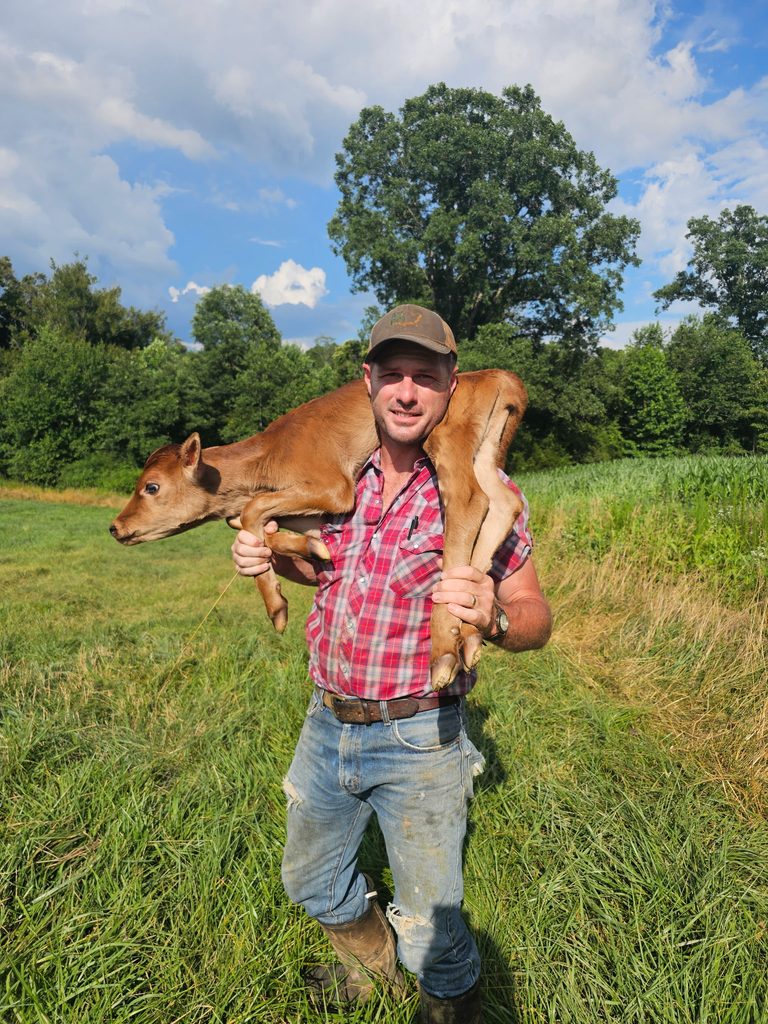
But last year, he received an email about a newly forming advocacy network for producers in North Carolina. He attended a meeting and knew that he had to get involved.
“Small farmers, we don’t really have a voice anywhere,” says Green, who raises beef and dairy cattle and co-owns Big Bottom Milk Company in Rutherfordton, NC. “The only voice you have is on social media or speaking directly to consumers in your marketplace.”
Traditional agricultural lobbying organizations, like the Farm Bureau and the Cattlemen’s Association, often don’t include the needs of small- and mid-scale producers. When it comes to the policy decisions that shape the regional food system and restrict access to land, markets, infrastructure, and funding, Green says small family farmers are left without a seat at the table.
Brian Kiger owns Saudade Grove Farm in Tobaccoville, NC, where he grows produce and raises pasture-raised lamb, eggs, and honey using regenerative and ecologically resilient practices. Like Green, he shares the feeling that the current food system is not built for farmers like him, instead favoring large agribusinesses with more access to capital and a loud presence in state and federal government.
“It’s been a challenging last 18 months, with a tariff policy that has been unfavorable to farmers. Some of the inputs that I use for processing and packaging have become more expensive,” says Kiger. “Inflation is very high, which is really cutting into our margins. And we don’t really have a voice for lawmakers to hear that, both in North Carolina and DC.”
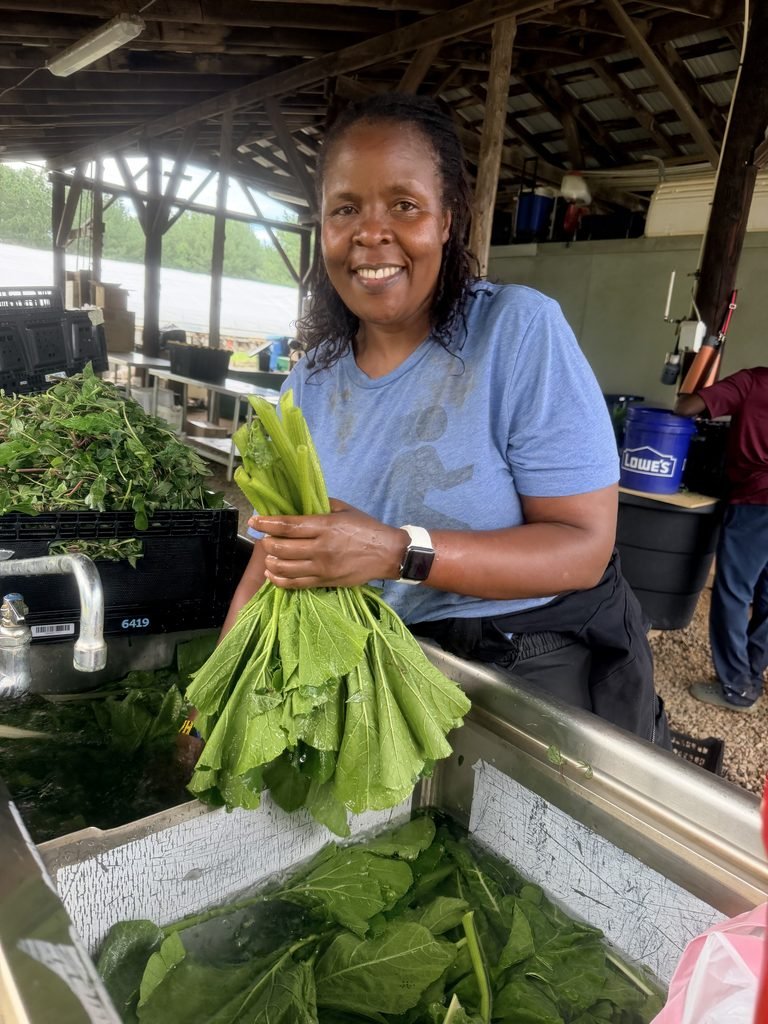
Stellah Ombaso of Harvest Roots Farm concurs. “Of course, the finances, that is the big problem that is affecting most farmers right now,” says the Concord, NC farmer. “We cannot be able to manage the labor, we cannot be able to buy the equipment that we need. So we are really struggling with so many things.” Ombaso grows the full rainbow of organic vegetables: tomatoes, cabbage, okra, collards, onions, ginger, cauliflower, beans, and more. But last year, she was forced to discard some of her product because she couldn’t find an accessible market. Unable to hire enough additional labor to help out on her farm due to rising costs, Ombaso regularly experiences burnout.
Addressing these challenges requires small farmers to speak up, develop solutions together, and claim a seat at the tables where decisions are being made. That recognition drew these farmers to RAFI’s North Carolina producer gatherings. “I see it as, ‘I’m doing myself an injustice if I’m not letting my voice be heard,’” says Kiger.
Exploring Solutions
In late 2025, RAFI began inviting farmers from across North Carolina to imagine a better future for the food system.
RAFI convened producers of all kinds — including cattle, dairy, hog and poultry, row crop, diversified crops, retail and wholesale producers, and those who have been impacted by disasters — to discuss their experiences and shared challenges. Participants were asked about the food systems surrounding their farms and communities, considering questions like, “What is working well? What’s missing? What’s broken? What resources do you use? What resources or services do you wish were available?”
For the farmers, it was affirming not only to talk about their challenges but to realize they were shared by so many others. “I see through these calls so many other farmers in similar situations that I can tell that I’m not alone, and that’s reassuring, and at the same time it’s a bit troubling,” says Kiger. “You see that this is a system, a statewide and even national system, and it’s not just me.”
From these conversations, RAFI identified 15 major needs that were common across farms in North Carolina. At a statewide producer gathering in January, farmers voted for their top four areas of concern: Grants and Loans for Farm Infrastructure, Regionally Rooted Food Retail and Wholesale Sector, Farmer Cooperation, and Regional Food Supply Chain Infrastructure.
Since then, farmers have been organizing around each of these four focus areas, meeting virtually to discuss and understand the problems, explore possible solutions, and develop strategies for addressing them at the policy level.
RAFI’s goal is to provide a support structure for farmers to organize around the issues that are most important to them and advance solutions that truly work for their farms and communities. “We’re hoping to hold this space for producers to take the lead, so they can make these solutions come to life as they have energy and interest,” says RAFI Grassroots Engagement Manager Rachel Brunner.
NC Advocacy Focus Areas
Grants and Loans for Farm Infrastructure: Expanding the availability of accessible, timely grant and low-interest loan options for producers who are recovering from disaster, trying to access land or acquire equipment, implementing a reimbursement-based program, or seeking annual operating funds.
Regionally Rooted Food Retail and Wholesale Sector: Advancing policies that open up farmers’ access to food retail market avenues by addressing root causes of market restrictions, including corporate consolidation of the grocery industry, insurmountable barriers to entry and sustainability for beginning retail operations, and limited capacity of producers, distributors, and retailers, especially in rural areas.
Farmer Cooperation: Fostering networks of collaboration for farmers across the state and increasing access to resources and funding for collaborative structures like food hubs and farmer cooperatives.
Regional Food Supply Chain Infrastructure: Scaling up cooperatively controlled supply chain infrastructure like cold storage, trucking, and processing facilities to better support farmers’ ability to access broader markets and scale their operations.
Are you an NC producer interested in supporting one or more of these focus areas? Email [email protected] about getting involved!
Assemble for Agriculture
In March, some of the participating farmers convened in Winston-Salem for Advocates Assemble, a half-day workshop exploring strategies for making long-term change. Participants discussed where and how people can leverage their power to influence policy decisions, practiced planning a policy campaign, and considered how to use their individual strengths and skills to help bring about change.
For many farmers, the event made them realize that policy change involves far more than simply calling their legislators, and that there are roles to play for folks with a broad range of interests, skill sets, and experiences. “It has opened my eyes, to be honest with you,” says Stellah Ombaso.
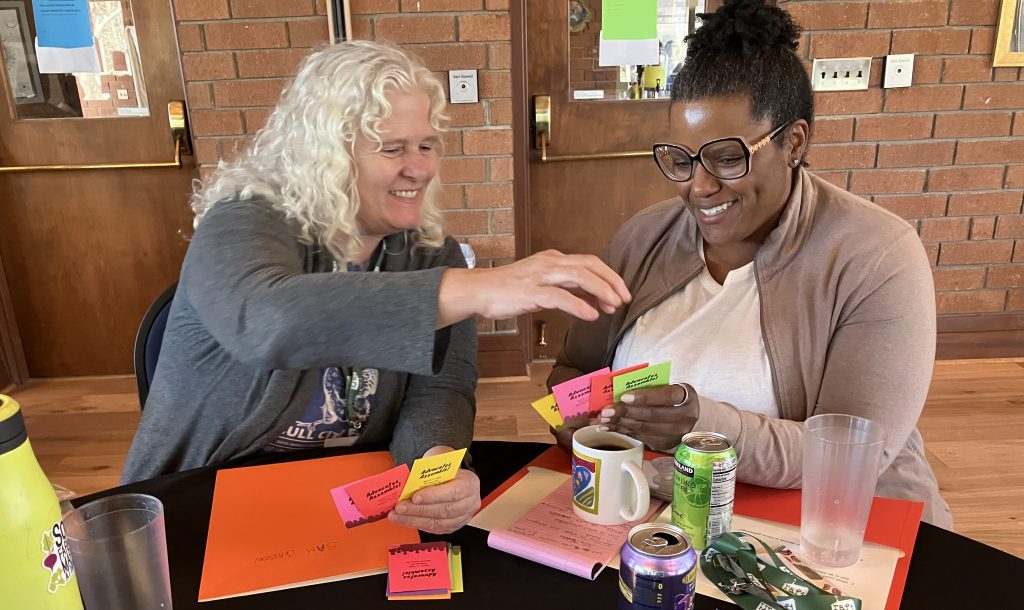
When thinking about the kinds of strengths she could bring to the advocacy table, Ombaso realized that her own experiences with burnout allowed her to better empathize with other farmers experiencing similar challenges and left her better able to speak to the kind of support farmers need. She says that this makes her even more determined to speak out for farmers so that they can continue to provide for their communities.
The skills that help in advocacy work can be built both on and off the farm. Preston Green grew up in a family that shipped milk for the Organic Valley co-op, participating as a teenager in its “Generation Organic” youth program and attending large-scale events like Farm Aid. As an adult, he spent a decade working for Organic Valley, learning the ins and outs of the food supply chain and working with diverse groups of people with different ideas and motivations, but all with the same mission to save family farms. He sees that experience as one he can directly apply to the collaborative process of organizing for policy solutions.
Across the board, participants identified a broad range of skills and strengths that they can apply to advocate for a better food system. Some come from connections they have with others in the food system or within their own communities, which they can leverage to mobilize support or collaborate on local solutions. For others, it’s their own ability to stay organized or to be flexible and pivot when things don’t go as planned. Others cited skills like “staying calm,” “making space for everyone to be heard,” “trying new things,” and “helping everyone feel invited and welcome.” These farmers show that advocacy superpowers can come from the most unexpected places.
Stronger Together
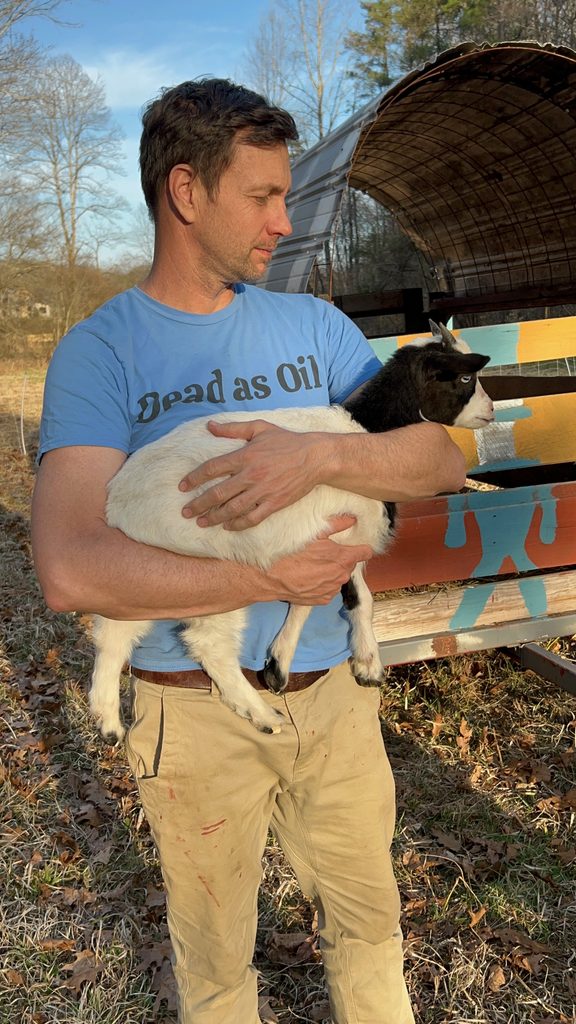
Farmers identified the need for collaboration and cooperation among small producers as one of their top motivators.
“There’s been a theme that’s coming out of smaller and medium farmers being in cooperation instead of competition,” says Brian Kiger. One of the focus areas, Farmer Cooperation, explicitly addresses solutions like co-ops and food hubs that enable farmers to pool resources and achieve economies of scale. But the other three focus areas also touch on the need for cooperative structures, whether through public infrastructure or farmer-to-farmer knowledge sharing.
Kiger says that the knowledge-sharing piece is already taking shape. “As a place for networking and idea sharing, these forums are really important for us,” he says. “I wanted to learn and hear what the issues are in other counties of the state with other farmers in different backgrounds, and it has been a great place to hear about other challenges, and also how farms are approaching those issues.”
For a farmer experiencing constraints on their business, Kiger advises doing a self-analysis to consider whether that constraint is solely internal to the individual farm or farmer, or whether it might be caused by a challenge beyond the borders of the farm — and whether it’s a challenge that others may share. “Whichever one you come up with, the opportunity to network with other farms and farmers, and learn from them, and just listen to what’s being said may be a key to unlocking some of those constraints,” he says.
“You may ask, ‘What am I going to get out of it?’ And with that question, I can respond that what you’re going to get out of it is knowledge, and knowledge is power.”
Green says that the keys to success for organizing are patience and open-mindedness.
“I’d really like to see this become a space where we can have shared experiences and shared values from small family farmers from across the Carolinas, so that they can join together and have a voice,” says Green. He says that if such a thing is going to be possible, “it will really need farmers who care about working together for a common good.”
“It’s hard to do when you’re very independent-minded, or when you feel like you’ve had your back against a wall for so long, to sit down and listen to farmers whose challenges are different from you,” he says. “But you’ve got to be patient enough to hear other perspectives and work towards solutions that may not benefit you directly.”
Green says he believes in the adage that a rising tide lifts all boats, and that solutions that help small farmers somewhere can strengthen the food system as a whole, benefiting small farmers everywhere.
Kara Hoving is a freelance writer specializing in sustainable food systems and climate change communication. She helps nonprofits tell solutions-based stories that build momentum for positive change.